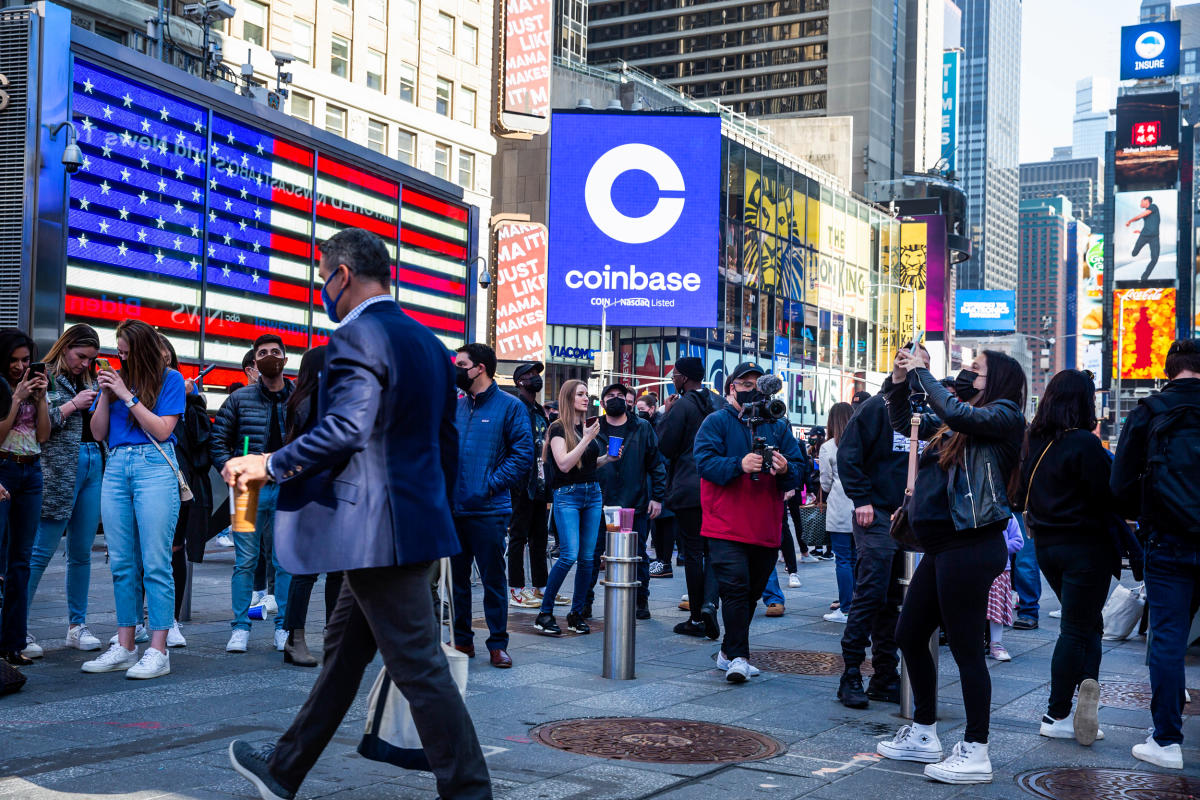
The CEO of the American cryptocurrency exchange Coinbase, Brian Armstrong, stated that his platform has significantly expanded its scope and is now capable of competing with major financial institutions in the United States. In his post on the social network X (formerly Twitter), he noted that Coinbase currently manages $420 billion in client assets. If the exchange were classified as a bank, it would rank as the 21st largest bank in the U.S. by asset volume. If Coinbase were considered a brokerage firm, it would be ranked eighth, surpassing many Wall Street giants.

Armstrong emphasizes that the boundaries between cryptocurrencies and the broader financial sector are becoming increasingly blurred. In particular, he expressed the opinion that traditional financial systems are becoming less efficient, while cryptocurrencies and blockchain technologies represent the future of finance. According to him, banks managing large financial platforms offer clients minimal interest rates on deposits, which he considers unfair.

«Why does the money you spend lose value instead of growing like an investment? Why doesn’t your checking account generate income like a savings account or, even better, like short-term Treasury bonds?» Armstrong wrote in his tweet. This question reflects the growing dissatisfaction among people with traditional financial institutions, which offer low interest rates on deposits while generating high profits from asset management.

Furthermore, Armstrong recently expressed the view that the world is moving toward a so-called «Bitcoin standard» in the monetary system. He explained that in the future, any government that holds gold should also have Bitcoin in its national reserves. According to experts, its unique properties make it an ideal alternative to fiat currencies and traditional savings instruments.

Armstrong’s statements highlight significant changes that are continuously reshaping both traditional financial and cryptocurrency markets. With the advancement of technology and the growing popularity of digital currencies like Bitcoin, cryptocurrency platforms such as Coinbase are becoming increasingly important players in the financial sector. This shift presents new opportunities but also challenges traditional banks, pushing them to adapt and compete with emerging technologies.

One way or another, under Armstrong’s leadership, Coinbase continues to gain momentum, and we may see even more changes in the way the global financial system operates in the future.

You might be interested in:
13.01.2026

New KYC Rules in India: Crypto Exchanges Tighten Scrutiny
India's Financial Intelligence Unit is tightening KYC and AML regulations for crypto exchanges: users are required to undergo real-time selfie verification, verify bank accounts, and provide geolocation data. The new measures are aimed at combating money laundering, deepfakes, and tax evasion in the crypto market.
09.01.2026

Cryptocurrency Licensing in the UK: New Rules and Deadlines
The UK is introducing a comprehensive regulatory regime for the crypto market. Find out when the FCA opens for applications, who is affected by the new requirements, and how crypto exchanges and services will be licensed.
04.01.2026

Global Implementation of the CARF Standard: New Requirements for Crypto Services
The OECD's international CARF standard introduces mandatory tax reporting for cryptocurrencies. Find out which countries are participating, who is affected by the new requirements, and when data exchange will begin.
30.12.2025

Binance has restricted withdrawals to Visa and MasterCard cards for users in Ukraine

Cryptocurrency exchange Binance has suspended withdrawals to Visa and MasterCard cards for users in Ukraine, disabled Recurring Buy, and explained the changes by citing the closure of its Bifinity service due to regulation.
Related Topics
altcoins
Amina Bank
Armenia
Binance
Bitcoin
Blockchain
blockchains
CARF standard
CASP license
Coinbase
crypto companies
crypto exchange
crypto exchanges
Crypto in Estonia
Crypto license in Hong Kong
crypto market
Crypto Regulation
Crypto Regulations in Hong Kong
Crypto Regulations in the US
Crypto-Friendly Banks
Crypto.com
cryptocurrency
cryptocurrency Finland
Cryptocurrency in Hong Kong
Cryptocurrency License
Cryptocurrency License in Estonia
cryptocurrency license in Malta
cryptocurrency license in the USA
Cryptocurrency Regulation
cryptocurrency trading
Euro-stablecoins
gold
Indian
Japan
licensing of crypto companies
Lithuania
Mastercard
MetaMask
MiCA
Nigeria
Obtaining a cryptocurrency license
South Korea
Stablecoin
stablecoins
Staking
The Central Bank of Russia
The SEC
Ukrainian
Visa
Popular
13.01.2026

New KYC Rules in India: Crypto Exchanges Tighten Scrutiny

India's Financial Intelligence Unit is tightening KYC and AML regulations for crypto exchanges: users are required to undergo real-time selfie verification, verify bank accounts, and provide geolocation data. The new measures are aimed at combating money laundering, deepfakes, and tax evasion in the crypto market.
09.01.2026

Cryptocurrency Licensing in the UK: New Rules and Deadlines

The UK is introducing a comprehensive regulatory regime for the crypto market. Find out when the FCA opens for applications, who is affected by the new requirements, and how crypto exchanges and services will be licensed.
04.01.2026

Global Implementation of the CARF Standard: New Requirements for Crypto Services

The OECD's international CARF standard introduces mandatory tax reporting for cryptocurrencies. Find out which countries are participating, who is affected by the new requirements, and when data exchange will begin.
30.12.2025

Binance has restricted withdrawals to Visa and MasterCard cards for users in Ukraine

Cryptocurrency exchange Binance has suspended withdrawals to Visa and MasterCard cards for users in Ukraine, disabled Recurring Buy, and explained the changes by citing the closure of its Bifinity service due to regulation.
To help improve your experience of our website we would like to use cookies. This means we collect some information on your activity while you are on the website. For more information read more about our use of cookies here, your setting can be changed at any time. Please accept our use of cookies and help us improve your experience.